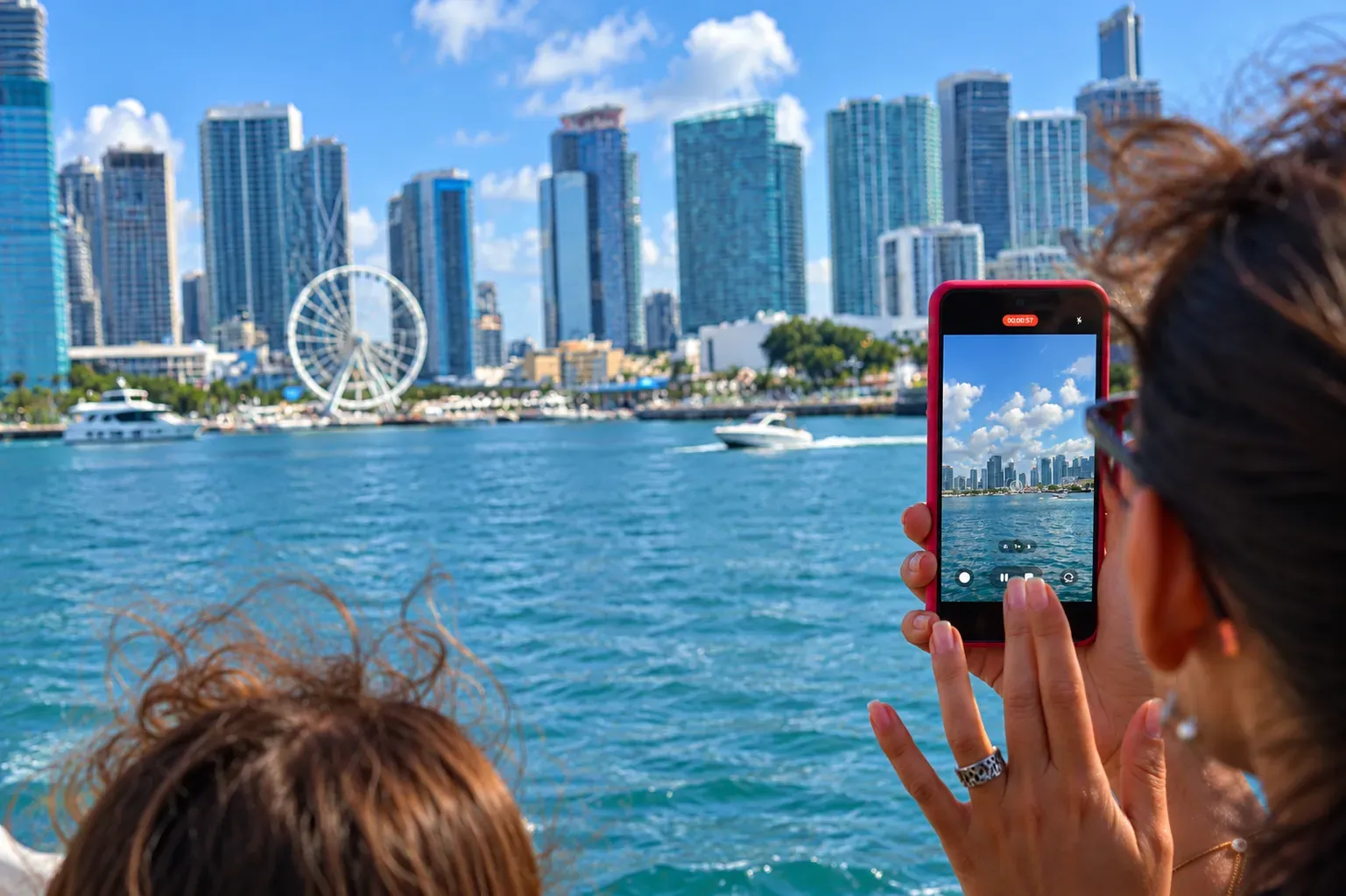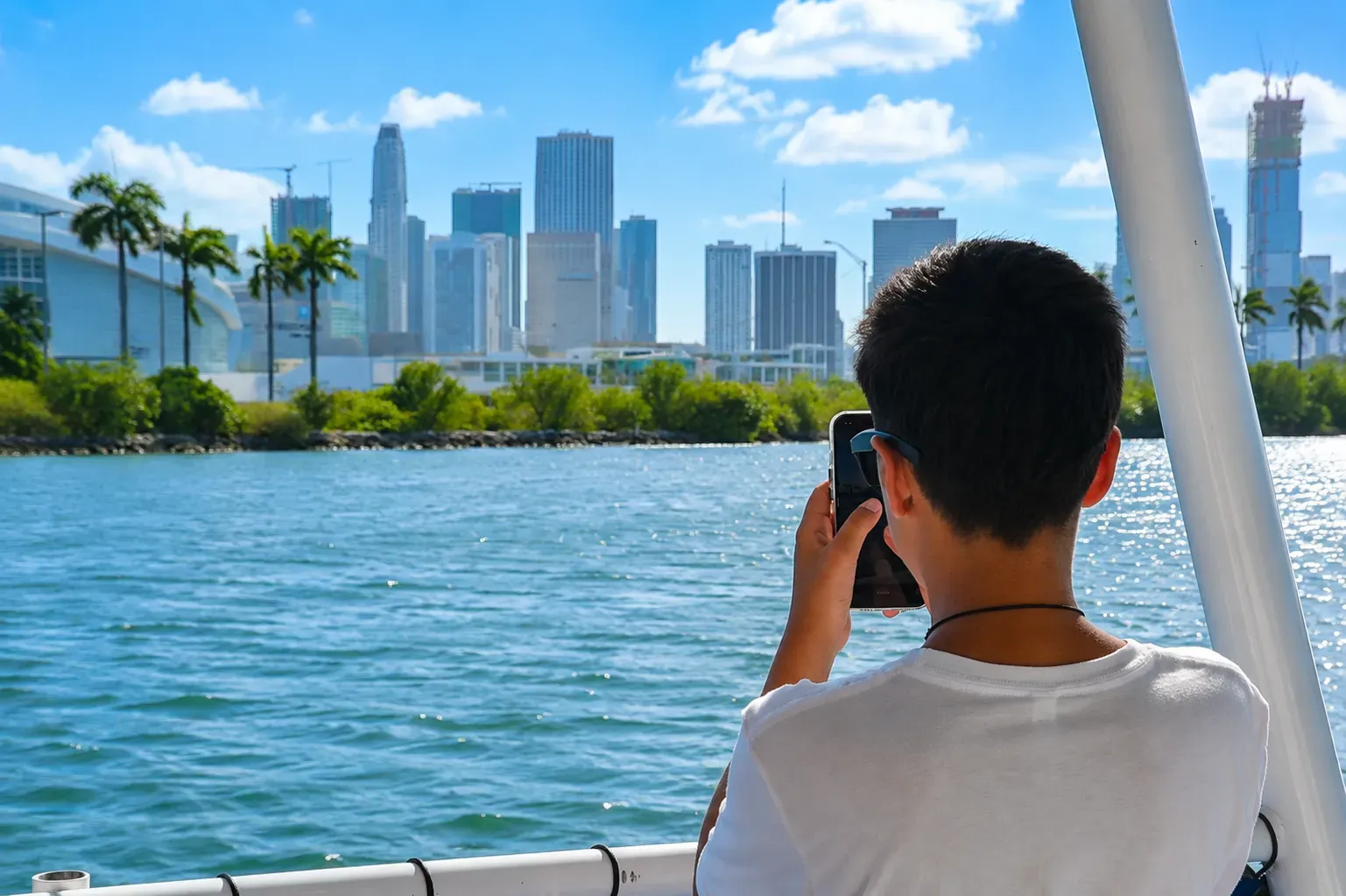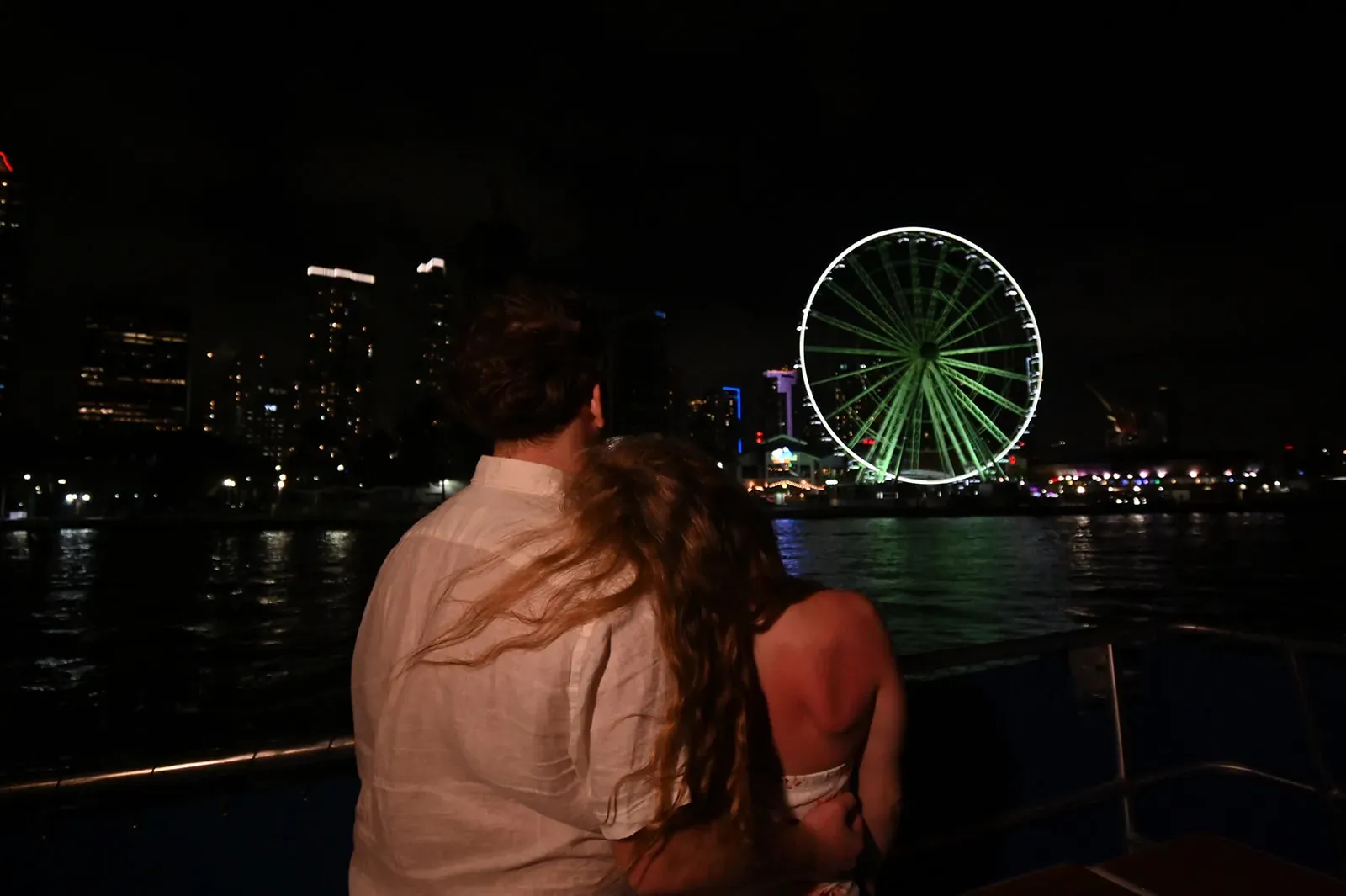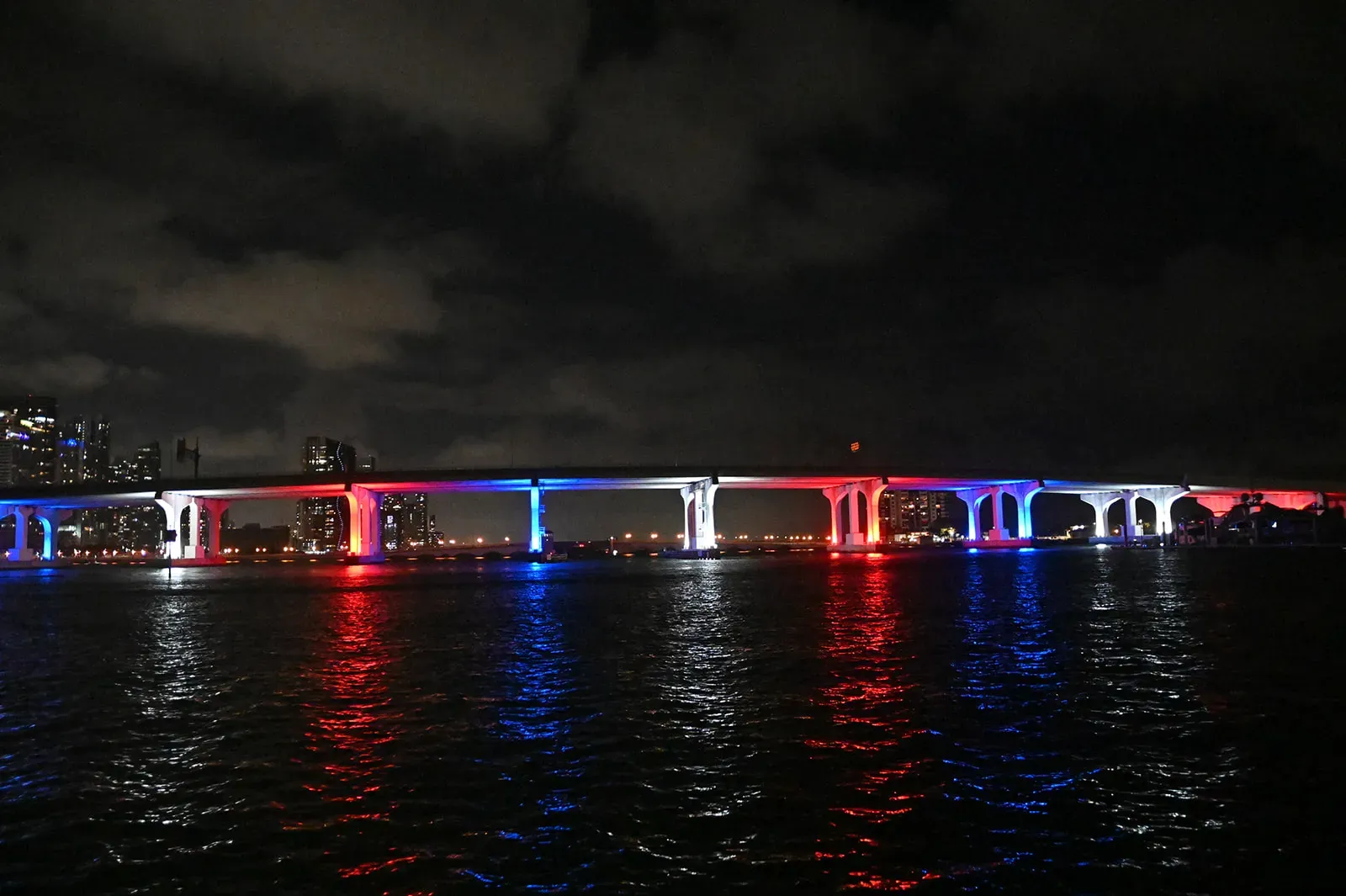

Miami Skyline
Discover the history, architecture, iconic landmarks, panoramic waterfront views, and remarkable evolution that define the Miami skyline.
The Miami skyline is not just one of the most recognizable skylines in the United States—it's the story of a city that never stopped believing it could become something extraordinary. Rising above Biscayne Bay, the Miami skyline reflects decades of architectural innovation, cultural diversity, resilience, and continuous evolution. What began as a modest downtown has transformed into one of the world's most admired waterfront cityscapes, with every generation adding another chapter to its horizon.
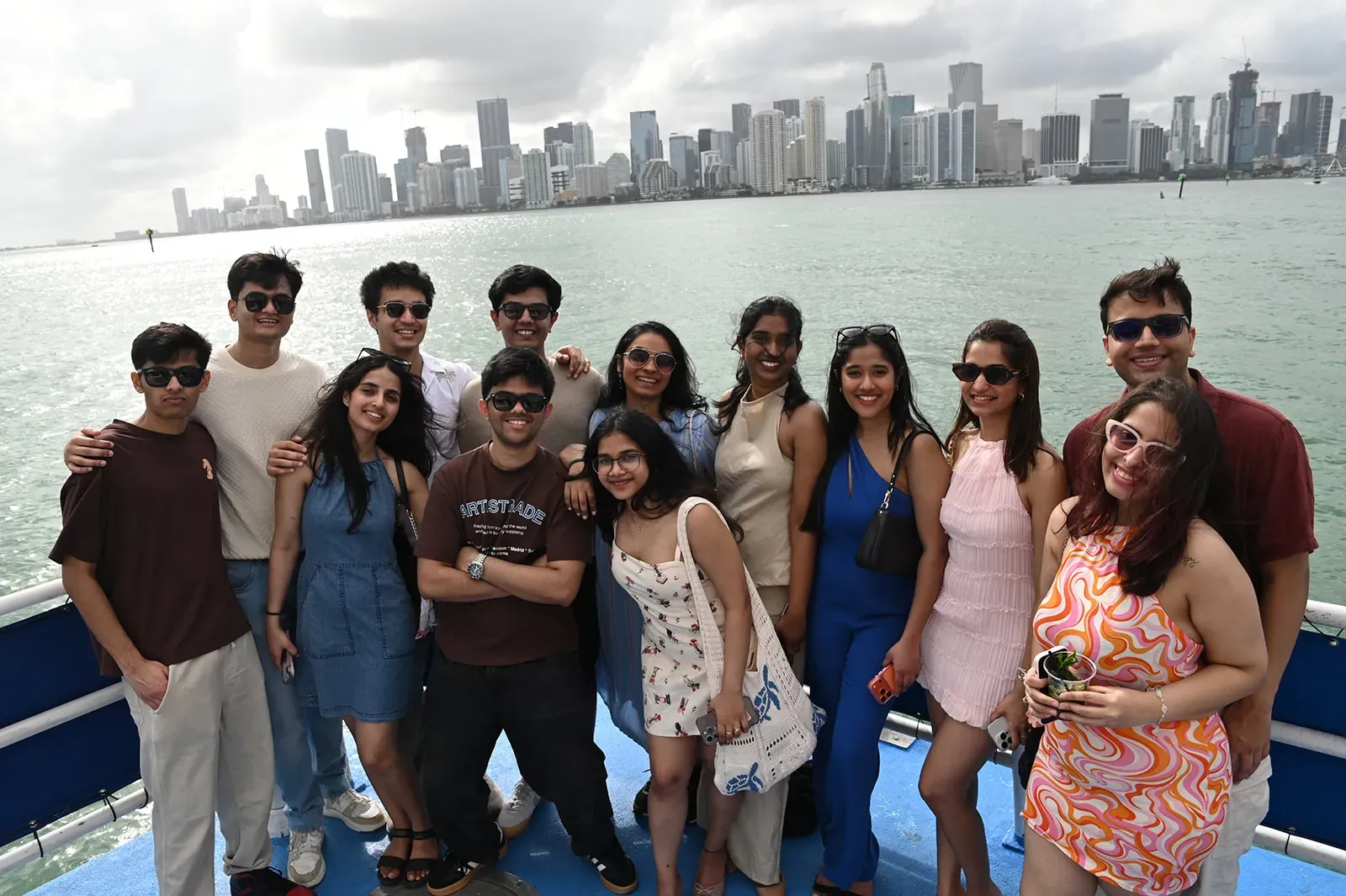
For anyone wanting to experience this remarkable city from its most complete perspective, Skyline Cruises of Miami offers an unforgettable way to appreciate the skyline from Biscayne Bay, where Downtown Miami, Brickell, the Miami River, PortMiami, and the surrounding waterfront come together as one breathtaking panorama.
In this ultimate guide, you'll discover the history behind the Miami skyline, the iconic buildings that define it, how it became one of America's most photographed cityscapes, the architectural evolution that continues to reshape its horizon, and why the skyline you see today will continue to evolve for generations to come.

Miami Skyline at a Glance
Before exploring the history, architecture, and evolution of the Miami skyline, here are a few key facts that make it one of the most recognizable and fastest-growing waterfront skylines in the United States.
- 📍 Location: Downtown Miami, Florida
- 🌊 Waterfront: Biscayne Bay
- 🏙️ Famous For: Modern architecture, luxury skyscrapers, and world-famous waterfront views
- 🏗️ Fastest-Growing Areas: Downtown Miami and Brickell
- ⭐ Iconic Landmarks: Freedom Tower, Waldorf Astoria Miami, Aston Martin Residences, Kaseya Center, Pérez Art Museum Miami, and Bayside Marketplace
- 📸 Best Panoramic View: Biscayne Bay offers the most complete perspective of the Miami skyline.
- 🌅 Best Time to Visit: Daytime, sunset, and nighttime each showcase a completely different side of the city.
- 🌎 What Makes It Unique: A multicultural city where generations of architects, engineers, entrepreneurs, and residents have helped shape one of America's most distinctive skylines.
- 🚧 Future: The skyline you see today won't be the same skyline you see tomorrow, as Downtown Miami continues reaching higher with every new development.
Explore the infographic below for a visual overview of the Miami skyline, its architecture, iconic landmarks, and remarkable evolution.

What Is the Miami Skyline?
The Miami skyline is the collection of high-rise buildings that define Downtown Miami, Brickell, and the waterfront along Biscayne Bay. Together, these neighborhoods create one of the most recognizable urban panoramas in the United States, combining world-class architecture, luxury residential towers, office skyscrapers, hotels, cultural landmarks, and one of the busiest cruise ports in the world.
Unlike many American skylines that developed over more than a century, the Miami skyline has transformed dramatically in just a few decades. New residential towers, mixed-use developments, hotels, and commercial buildings continue to reshape the horizon, making it one of the fastest-evolving city skylines in North America.
What makes the Miami skyline truly unique is not simply the height of its buildings—it's the way the city interacts with the water. Biscayne Bay, the Miami River, Brickell Key, PortMiami, and the surrounding islands create natural open spaces that allow the skyline to be viewed as one complete panorama rather than a collection of individual skyscrapers.
Today, the Miami skyline represents far more than architecture. It reflects the city's growth, cultural diversity, entrepreneurial spirit, and ability to reinvent itself generation after generation. Every new building becomes part of a skyline that continues to evolve while remaining one of South Florida's defining landmarks.

Why Is the Miami Skyline So Famous?
The Miami skyline is famous because it represents far more than a collection of skyscrapers. The skyline of Miami tells the story of a city that has continuously reinvented itself through architecture, culture, innovation, and the determination of the people who helped shape modern South Florida. Every decade has added something new to the horizon, creating a cityscape that continues to evolve while remaining instantly recognizable around the world.
Unlike many major cities where the skyline has changed gradually over generations, the Downtown Miami skyline continues to transform with new residential towers, luxury hotels, office buildings, and mixed-use developments. Returning visitors often discover a completely different horizon than the one they remember, making Miami one of the fastest-evolving urban landscapes in North America.
Its waterfront location is another reason the skyline stands apart. Framed by Biscayne Bay, the Miami River, Brickell, Brickell Key, and PortMiami, the city can be appreciated as one complete panorama instead of isolated skyscrapers. That unique relationship between land and water has helped make the skyline one of the most photographed cityscapes in the United States and provides the foundation for the spectacular Miami skyline views that have become recognized around the world.
The skyline also serves as the backdrop for many of Miami's defining moments. From Ultra Music Festival and championship celebrations to international sporting events, cultural festivals, fireworks displays, and waterfront gatherings, the city's biggest celebrations unfold beneath its towers. As you continue through this guide, you'll discover how the Miami architecture, surrounding waterways, and remarkable history transformed the skyline into one of the world's most recognizable waterfront destinations.

The Evolution of the Miami Skyline
The skyline of Miami wasn't built in a decade—it was shaped by more than a century of vision, resilience, innovation, and continuous growth. Every generation has contributed something different, transforming a small coastal city into one of the most recognizable waterfront skylines in the world.
1896 – The Beginning of Miami
Miami was officially incorporated on July 28, 1896, with fewer than 500 residents. The arrival of Henry Flagler's Florida East Coast Railway connected the city to the rest of the state, creating the foundation for the economic growth that would eventually reshape Downtown Miami.
1925 – The Freedom Tower Becomes a Symbol
When the Freedom Tower opened in 1925, it quickly became one of Miami's most recognizable landmarks. Originally built as the headquarters of The Miami News, it later became a symbol of hope for thousands of Cuban refugees arriving in South Florida during the 1960s. Today, it remains one of the most historically significant buildings in Downtown Miami.
1980s – The Modern Skyline Begins
The 1980s marked the beginning of Miami's vertical transformation. Modern office towers and glass skyscrapers started replacing the low-rise downtown landscape, introducing the architectural identity that would define the city for decades to come.
1999 – A New Waterfront Destination
The opening of the arena now known as Kaseya Center helped transform Downtown Miami into more than a financial district. Combined with Bayfront Park, Bayside Marketplace, and the expanding waterfront, the area evolved into a destination for sports, entertainment, culture, and everyday life.
2000s – Downtown Miami Comes to Life
The skyline continued rising as Downtown Miami and Brickell experienced an unprecedented residential boom. Luxury condominiums, world-class hotels, office towers, restaurants, grocery stores, parks, schools, and entertainment venues transformed the area into one of Florida's fastest-growing urban communities. For the first time, people weren't just working downtown—they were choosing to call it home.
Today – A Skyline That Never Stops Growing
Projects such as Waldorf Astoria Miami, Miami Worldcenter, Aston Martin Residences, and the Signature Bridge continue redefining the city's future. Every new development adds another layer to a skyline that has become a global symbol of ambition, innovation, and architectural excellence.
Tomorrow – The Next Chapter
Perhaps the most remarkable part of Miami's story is that it is still being written. The skyline you see today will not be the same skyline you see tomorrow. New architects, engineers, entrepreneurs, residents, and visionaries continue shaping Downtown Miami every single year.
The Miami skyline isn't the work of one person, one company, or one generation. It is the result of an entire community believing in growth, embracing opportunity, and building something greater together. While many cities eventually stop growing outward or upward, Miami continues reaching higher. That is the true evolution of the skyline—and its greatest chapter is still ahead.

The Buildings That Define the Skyline of Miami
The Miami skyline is recognized around the world because no two landmark buildings tell the same story. Together, the Skyline of Miami blends history, engineering, luxury living, finance, sports, and culture into one of America's most distinctive waterfront skylines. Its remarkable architecture has also created some of the most iconic Skyline Miami views, giving photographers, residents, and visitors countless perspectives that continue to define the city's global identity.
Freedom Tower
Completed in 1925, the Freedom Tower remains one of Miami's most historically significant landmarks. Beyond its Mediterranean Revival architecture, it became a symbol of hope for thousands of Cuban refugees during the 1960s, giving the skyline a lasting connection to Miami's history.
Waldorf Astoria Miami
The Waldorf Astoria Miami is redefining the city's horizon with its unmistakable stacked-cube design. Once completed, it is expected to become Florida's tallest building, representing the next generation of architectural innovation in Downtown Miami.
Aston Martin Residences
Located where the Miami River meets Biscayne Bay, the Aston Martin Residences have quickly become one of the most recognizable additions to the skyline. Its elegant glass design and waterfront location make it an architectural landmark visible from multiple vantage points throughout the city.
Four Seasons Hotel Miami
For years, the Four Seasons has helped define the Brickell skyline. Its height, timeless design, and location symbolize Brickell's transformation into Miami's premier financial district and one of the city's most prestigious neighborhoods.
Kaseya Center
Home of the Miami Heat, the Kaseya Center is one of the most recognizable landmarks on the Downtown waterfront. Beyond basketball, it hosts concerts, international events, and major celebrations that continue to shape Miami's cultural identity.
Bayside Marketplace
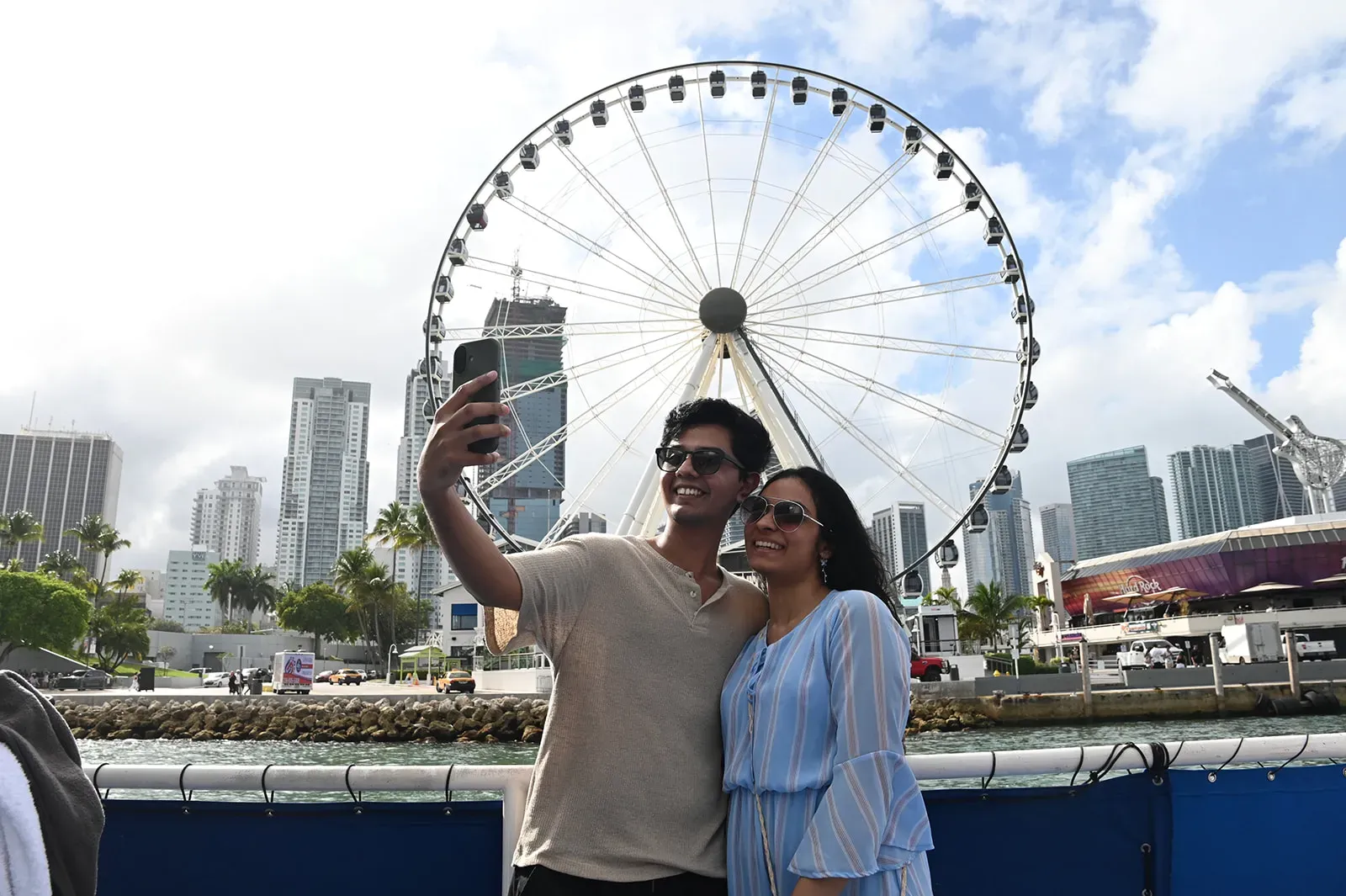
Situated along Biscayne Bay, Bayside Marketplace has become one of Miami's most visited destinations and one of the city's most recognizable waterfront landmarks. Millions of visitors come here every year to enjoy shopping, dining, live entertainment, and panoramic views of the skyline. It also serves as one of the best starting points for anyone wanting to experience the Miami skyline from the water, making it an essential part of Downtown Miami's tourism experience.
Pérez Art Museum Miami (PAMM)
Positioned along Biscayne Bay, the Pérez Art Museum Miami combines contemporary architecture with world-class art, adding another distinctive landmark to the waterfront while reinforcing Miami's reputation as a global destination for culture and design.
Together, these landmarks give the Downtown Miami skyline its unmistakable identity. Each contributes something unique, creating a skyline that is admired not because every building looks the same, but because every landmark adds another chapter to Miami's story.

Downtown Miami Fast Facts
Before experiencing the skyline in person, here are a few interesting facts about Downtown Miami and the waterfront that continues shaping one of America's most recognizable city skylines.
- 🏙️ Hundreds of High-Rise Buildings: Downtown Miami and Brickell feature hundreds of high-rise buildings that define one of the nation's most recognizable waterfront skylines.
- 📏 1,049 Feet: Waldorf Astoria Miami is expected to become Florida's tallest skyscraper upon completion.
- 🌊 40 Miles of Waterfront: Biscayne Bay stretches approximately 40 miles, creating the spectacular natural backdrop that makes the skyline so distinctive.
- 🚢 World-Class Cruise Gateway: PortMiami is one of the busiest cruise ports in the world, welcoming millions of cruise passengers every year.
- 🌴 A Landmark Destination: Bayside Marketplace has welcomed millions of visitors since opening in 1987 and remains one of Downtown Miami's most iconic attractions.
- 👨👩👧👦 A Growing Residential Community: Downtown Miami has evolved into a thriving neighborhood where entrepreneurs, attorneys, doctors, students, families, artists, and professionals from around the world live, work, and help shape the future of the city.
- 🏗️ Always Evolving: New residential towers, hotels, office buildings, and mixed-use developments continue transforming Downtown Miami, ensuring the skyline never stops reaching higher.

What Makes Miami Skyline Architecture Unique?
Miami skyline architecture is unlike any other in the United States because it was never confined to a single design philosophy. Instead, the architecture of Miami reflects decades of innovation, international influence, engineering excellence, and bold creativity. Every generation has introduced new ideas, allowing the city to develop a skyline where historic landmarks, luxury residences, commercial towers, and contemporary skyscrapers coexist in remarkable harmony.
One of the defining characteristics of Downtown Miami architecture is its diversity. Rather than repeating the same glass tower over and over, architects have embraced individuality, creating buildings with distinctive silhouettes, curved façades, dramatic heights, and waterfront-oriented designs. This architectural variety gives Miami a visual identity that is instantly recognizable from both land and water.
The relationship between architecture and Biscayne Bay is equally important. Many of the city's most recognizable buildings were designed to maximize natural light, panoramic waterfront views, and reflective glass exteriors that transform throughout the day. This constant interaction between the skyline, the bay, and the changing light creates a cityscape that never looks exactly the same twice, which is one of the reasons skyline cruises have become such a memorable way to appreciate Miami's architectural beauty.
Perhaps what defines modern Miami architecture more than anything else is its willingness to evolve. New landmark developments continue to reshape Downtown Miami while respecting the city's waterfront setting, ensuring that every generation contributes something unique to one of America's most distinctive architectural skylines.

Why Biscayne Bay Offers the Best Miami Skyline Views
The best Miami skyline views begin on Biscayne Bay, where the city's architecture, waterfront, and open horizon come together in a way that simply isn't possible from the streets below. From Downtown Miami, you're surrounded by buildings. From the bay, you finally appreciate the skyline as one complete masterpiece stretching across the waterfront.
That difference changes everything.
On land, traffic, neighboring buildings, and limited sightlines interrupt the experience. Out on the bay, Downtown Miami, Brickell, Brickell Key, the Miami River, PortMiami, and Bayside Marketplace come together as one uninterrupted panorama. It's one of the many reasons Boat Tours in Miami have become one of the most popular ways to experience the city.
The skyline also transforms throughout the day.
Morning light reflects across the glass towers. Afternoon sunshine highlights the city's architectural details. As daylight fades, the skyline begins to glow, creating unforgettable Miami skyline at sunset moments that photographers and visitors return for year after year.
Then everything changes again.
Once darkness arrives, thousands of lights illuminate Downtown and Brickell, giving the city an entirely different personality. The reflections across Biscayne Bay create a dramatic setting that many visitors consider even more spectacular than the daytime view, especially during a Miami skyline at night experience.
Biscayne Bay also adds something the streets never can—movement. Cruise ships depart from PortMiami, boats cross the bay, helicopters pass overhead, and the ocean breeze becomes part of the experience. On the right day, you may even spot dolphins, manatees, pelicans, or other marine life with the city rising in the background.
The skyline doesn't appear all at once. It slowly unfolds as you move across the water. Then comes the moment when the full city opens before you—a panoramic view that instantly explains why Biscayne Bay remains the most remarkable place to appreciate the skyline of Miami.

Miami Skyline at Sunset
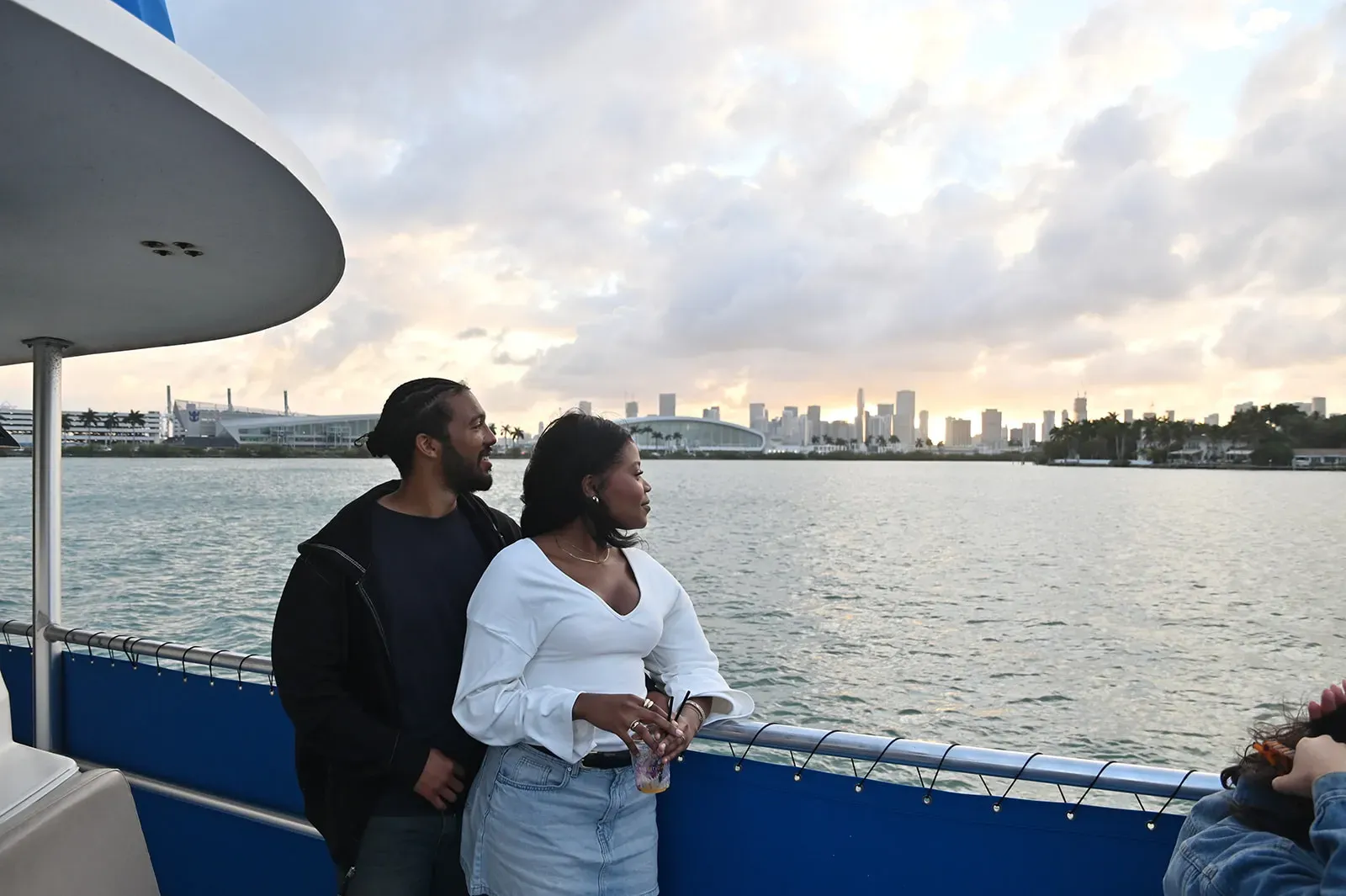
There is a reason sunset is one of the most anticipated times of the day in Miami. As the sun begins to descend over the western horizon, the city slowly transforms. Glass skyscrapers reflect shades of gold, orange, pink, and purple, while the waters of Biscayne Bay mirror every color across the skyline. For many visitors, this is the moment when the beauty of Miami truly comes to life.
Unlike a daytime view, sunset creates a completely different atmosphere. The buildings seem warmer, the reflections become more dramatic, and the city's energy begins to shift from a busy business district into one of the most vibrant waterfront destinations in the world. Every evening offers a different combination of clouds, light, and colors, making no two sunsets exactly alike.
One of the most remarkable moments happens when the skyline is viewed from Biscayne Bay. As the boat gently moves across the water, the entire horizon opens before you, revealing Downtown Miami, Brickell, and the surrounding waterfront in one breathtaking panorama. It is this perspective that has made the Miami Sunset Cruise one of the most memorable experiences for visitors looking to appreciate the city during its most beautiful hour.
As daylight slowly fades, the skyline begins another transformation. Office lights switch on, reflections become brighter, and the city prepares for the evening ahead. The sunset doesn't mark the end of the experience—it becomes the bridge between Miami's daytime beauty and the spectacular skyline that emerges after dark.

Miami Skyline at Night
When daylight fades, the Miami skyline reveals an entirely different personality. The city's illuminated towers, waterfront reflections, and vibrant atmosphere create a scene that feels alive long after the sun has disappeared. Rather than slowing down, Downtown Miami simply changes its rhythm, becoming one of the most visually striking skylines in the United States after dark.
As evening settles in, office buildings give way to rooftop restaurants, waterfront dining, concerts, sporting events, and nightlife. The Kaseya Center lights up for Miami Heat games and major performances, Bayside Marketplace fills with live entertainment, and PortMiami continues welcoming and departing some of the world's largest cruise ships. Together, these elements transform the skyline into more than an architectural landmark—they create a living city that never feels still.
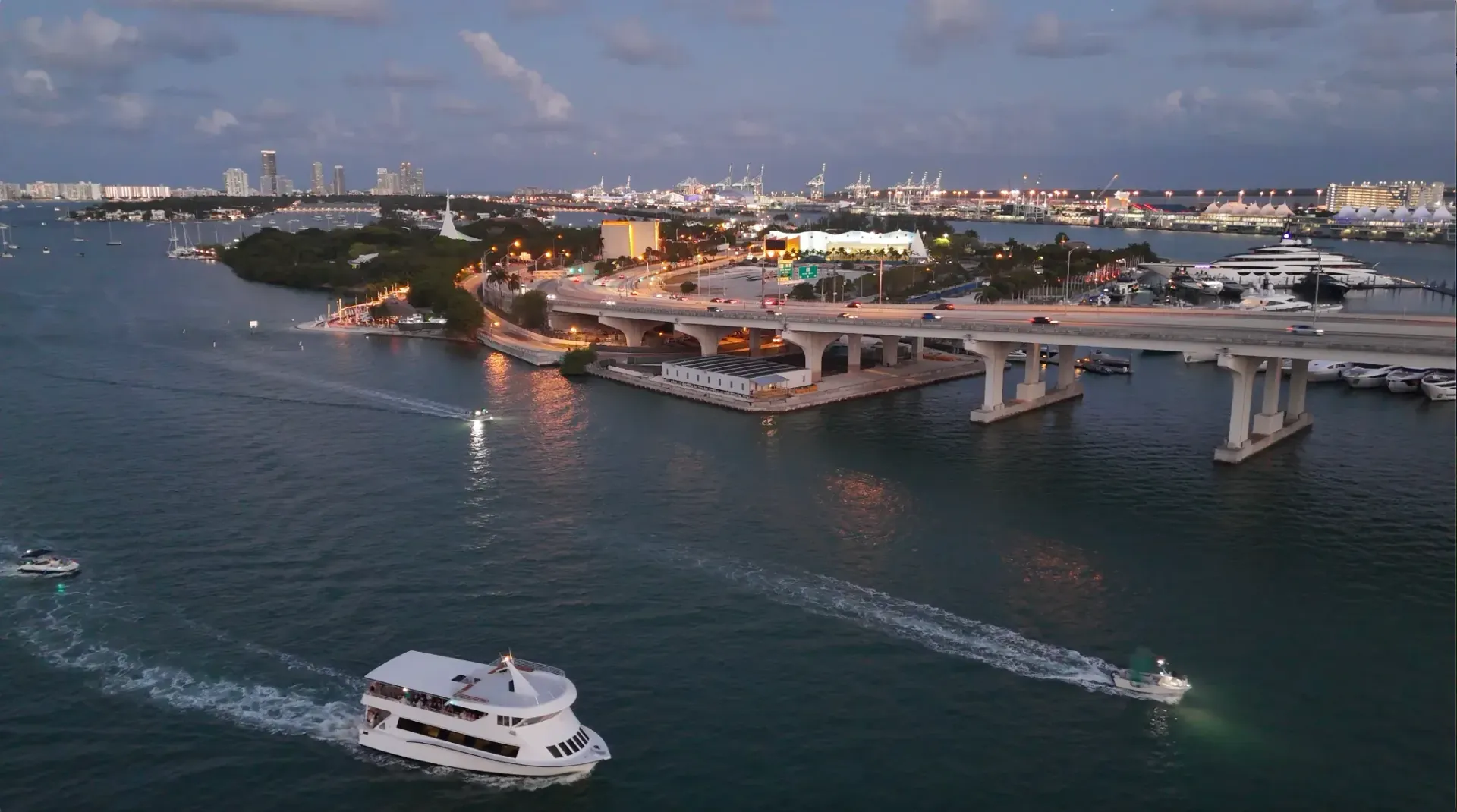
From Biscayne Bay, the nighttime experience becomes even more unforgettable. The calm water reflects thousands of lights from Downtown Miami and Brickell, while passing yachts, illuminated bridges, and the occasional helicopter add movement to an already spectacular backdrop. Every reflection across the bay creates a new perspective, making the skyline feel different each time you experience it.
For visitors who want to appreciate Miami after dark, a Miami Night Cruise offers one of the most memorable ways to experience the city's evening skyline. Away from traffic and surrounded by open water, the entire waterfront comes together in one uninterrupted panoramic view, revealing a side of Miami that many visitors never experience from land.
The beauty of the skyline at night isn't defined only by its lights. It's defined by its energy. It's a city that continues moving, celebrating, creating, and welcoming people from around the world—long after the sun has set.

Experience the Miami Skyline From the Water
No matter how impressive the skyline looks from land, nothing compares to experiencing it from Biscayne Bay. Being on the water changes your perspective, allowing you to appreciate the city's scale, waterfront architecture, and natural surroundings without traffic, crowded sidewalks, or buildings blocking your view.
One of the advantages of exploring the bay is that every experience is different. Some visitors prefer a relaxing sightseeing cruise with live narration, while others enjoy celebrating special occasions, taking photographs, or simply watching the city from a peaceful waterfront setting. Families traveling together often choose Family-Friendly Boat Tours in Miami, giving everyone—from young children to grandparents—the opportunity to enjoy the skyline at a comfortable pace.
For visitors looking for a more adventurous experience, Jet Ski Tours provide an entirely different way to explore Biscayne Bay. Riding across the open water places you closer to the skyline while giving you the freedom to experience Miami from a unique and exciting perspective that few visitors ever forget.
Whether you prefer a relaxing cruise or an unforgettable adventure on the water, one thing remains the same: the skyline becomes more than something you look at. It becomes something you experience. That connection between Biscayne Bay and Downtown Miami is what has made the city's waterfront one of the most memorable destinations in Florida for generations of visitors.

The Future of the Miami Skyline
One thing is certain about the future of the Miami skyline—it will never stop evolving. The skyline you admire today will not be the same skyline you see tomorrow. Every year, new ideas, new architects, new investors, and new developments continue reshaping Downtown Miami, proving that this city has no intention of standing still.
The growth of the Downtown Miami skyline isn't measured by a single skyscraper. It's measured by constant transformation. Parking lots become luxury towers. Older buildings make way for modern developments. New residential communities, office buildings, hotels, and public spaces continue changing the face of the city while preserving its connection to Biscayne Bay.
Major projects continue redefining the city's future. The Waldorf Astoria Miami is expected to become Florida's tallest skyscraper, while the Signature Bridge is transforming one of the city's most recognizable gateways. Together, these projects represent the next generation of Miami skyline development and demonstrate that Downtown Miami continues looking forward rather than standing still.
What makes the skyline truly unique, however, isn't a single building or a single developer. It's the collective vision of generations of people. No one person could recreate what countless architects, engineers, entrepreneurs, construction workers, artists, immigrants, and residents have built together over decades. The skyline of Miami is the result of a community united by the ambition to build, innovate, and leave something greater for the next generation.
Perhaps that's the greatest difference between Miami and many other cities. Miami doesn't expand outward—it rises upward. Every new tower represents another chapter in the city's story, another generation pursuing bigger ideas, and another reason why the skyline continues to evolve.
The future Miami skyline isn't just being imagined—it's already under construction. Long after this article is published, another tower will begin rising, another project will break ground, and another chapter will be added to one of the fastest-evolving skylines in the world.

The Miami Skyline: A City That Never Stops Reaching Higher
The Miami skyline is far more than a collection of skyscrapers rising above Biscayne Bay. It represents generations of people who arrived with ambition, determination, and the desire to build something greater than themselves. Every architect, engineer, entrepreneur, construction worker, artist, and resident has contributed to a skyline that continues evolving with every passing year.
What makes the skyline of Miami truly unforgettable isn't simply its height or its architecture. It's the story behind every building. A city shaped by different cultures, different ideas, and different generations working toward a common future. No single person created the skyline. It exists because an entire community believed in building something extraordinary together.
Whether you're visiting for the first time or returning to discover what's new, exploring the city's Miami Tours offers an opportunity to experience not only the skyline, but also the neighborhoods, history, culture, and waterfront that continue defining modern Miami.
Perhaps that's why every visit feels different. Another tower rises. Another neighborhood grows. Another chapter is written. The skyline you admire today will continue changing tomorrow, making every return to Miami a completely new experience.
If there is one place that captures the spirit of modern Miami, it is the Miami skyline itself. And if you want to experience its history, architecture, culture, and breathtaking waterfront from the perspective that brings it all together, your journey begins with Miami Skyline Cruises.
The skyline never stops growing because Miami never stops believing in what's possible. That's what makes the Miami skyline one of the most remarkable cityscapes in the world—and why its greatest chapter is still being written.